Pre-Arrival Guest Communication: Best Practices, Timing & Examples
Discover how effective pre-arrival guest communication can improve the hotel guest experience. From welcome emails and arrival information to personalized recommendations and local activities, explore best practices, ideal email timing, and practical examples to help hotels connect with guests before check-in.


A great hotel experience starts long before a guest arrives at reception. From the moment a reservation is confirmed, hotels have an opportunity to build relationships, provide useful information, and help travelers make the most of their upcoming stay.
Pre-arrival guest communication plays an important role in creating a smooth and memorable guest experience. Whether it's a booking confirmation, a welcome message, or recommendations for local activities, the information guests receive before check-in can shape their expectations and overall satisfaction.
In this guide, we'll explore the importance of pre-arrival guest communication, what to include in your emails, when to send them, and how to make the process easier and more effective.
What Is Pre-Arrival Guest Communication?
Pre-arrival guest communication refers to the messages hotels send to guests between booking confirmation and check-in. These communications help travelers prepare for their stay by providing important information, answering common questions, and introducing them to the hotel and surrounding destination.
By delivering relevant information at the right time, hotels can turn a simple email into a valuable part of the guest journey.
Why Is Pre-Arrival Communication Important for Hotels?
Travelers have more information available to them than ever before, but planning a trip can still be overwhelming. From arranging transportation to deciding what to do at their destination, guests often have plenty of questions before arriving at their accommodation.
1. Create a Positive First Impression
A friendly, informative pre-arrival email helps establish a welcoming atmosphere and shows guests that you're looking forward to their visit.
Even small details, such as addressing guests by name or providing helpful destination information, can make communications feel more personal.
2. Help Guests Feel Prepared
Arriving in an unfamiliar destination can be stressful, especially after a long journey. Guests may be unsure how to reach the hotel, whether early check-in is available, or how to arrange transportation from the airport. Providing these details in advance helps eliminate uncertainty and makes the arrival process easier.
3. Reduce Repetitive Questions for Hotel Staff
Hotel reception and concierge teams often spend considerable time answering questions about check-in times, parking, transportation, and local attractions. Including this information in pre-arrival emails can reduce the number of repetitive inquiries and free up staff to focus on guests who need more personalized assistance.
4. Encourage Guests to Explore the Destination
One of the biggest opportunities in pre-arrival guest communication is helping travelers discover what they can experience during their stay. Guests may already know about the destination's most famous attractions, but they might not be aware of lesser-known experiences, seasonal activities, or convenient tours departing near their hotel. By sharing curated recommendations, hotels can position themselves as a trusted source of local knowledge.
5. Create Additional Revenue Opportunities
Pre-arrival emails can also provide opportunities to introduce guests to services and experiences they may want to book before arrival. When guests can book directly through the hotel's recommendations, the process becomes more convenient for travelers while creating opportunities for additional commission or service revenue.
What Should a Hotel Pre-Arrival Email Include?
A Warm Welcome
Start with a friendly greeting that acknowledges the guest's upcoming visit. A simple message welcoming them to the hotel and expressing excitement about their stay helps create a personal connection. Where possible, personalize the message with the guest's name, arrival date, or other relevant reservation details.
Essential Arrival Information
Make sure guests can easily find practical information, including:
-
Check-in and check-out times
-
Hotel address and contact details
-
Parking information
-
Reception hours
-
Luggage storage options
-
Early check-in or late check-out availability
Providing these details ahead of time helps guests prepare and reduces unnecessary questions upon arrival.
Airport Transfers and Transportation
Transportation is often one of the first things travelers need to organize, particularly when visiting a new destination.
A hotel pre-arrival email is an ideal place to share information about airport transfers, public transportation, parking, and directions.
If guests can book an airport transfer in advance, include a direct booking link to make the process as simple as possible.
Hotel Amenities and Services
Pre-arrival emails can also introduce guests to services available at the property.
Depending on the hotel, these might include breakfast options, restaurants, wellness facilities, spa treatments, or other amenities.
Highlight services that guests may want to reserve before arrival, especially those with limited availability.
Local Tours and Pre-Arrival Activities
Many travelers begin researching activities long before arriving at their destination.
Including local recommendations in a pre-arrival email helps guests discover experiences they might otherwise overlook.
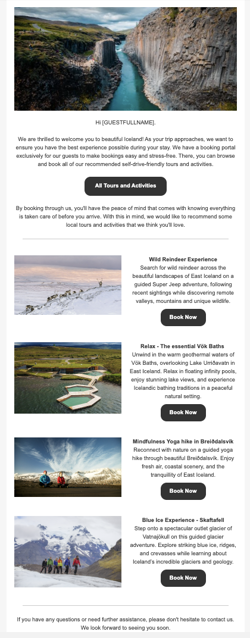
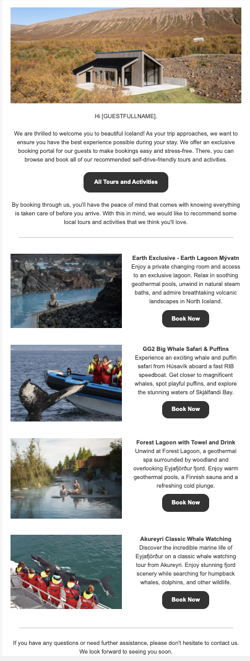
For example, hotels in Iceland might recommend whale watching, glacier hikes, geothermal lagoons, food tours, or Northern Lights excursions.
Providing a curated selection of relevant activities, along with direct booking links, makes it easier for guests to plan their stay.
Clear Calls to Action
Every pre-arrival email should make it easy for guests to take the next step.
Whether you're encouraging travelers to book an airport transfer, explore local activities, or contact the hotel, use clear and straightforward calls to action.
Buttons such as "Explore Local Experiences," "Book Your Airport Transfer," or "Plan Your Stay" tell guests exactly what to expect.
When Should Hotels Send Pre-Arrival Emails?
Timing is an important part of an effective hotel pre-arrival communication strategy.
Send an email too early, and guests may forget the information. Send it too late, and they may have already made their plans.
The ideal schedule depends on the type of property, destination, and booking patterns, but a simple sequence can help hotels communicate effectively without overwhelming guests.
Immediately After Booking: Confirmation and Welcome
The first email should confirm the reservation and provide essential booking details.
This is also an opportunity to welcome guests, introduce the hotel, and let them know what to expect as their arrival date approaches.
At this stage, focus on reassurance and practical information rather than overwhelming guests with additional offers.
7–14 Days Before Arrival: Destination Inspiration
As their trip approaches, guests may be actively planning activities, transportation, and sightseeing.
This is a particularly useful time to share local recommendations and encourage guests to explore available experiences.
For example, a hotel might send an email highlighting popular tours, seasonal attractions, or activities near the property.
Including direct booking links allows guests to secure experiences before arriving, which can be especially valuable for popular activities with limited availability.
1–3 Days Before Arrival: Final Practical Details
Shortly before check-in, shift the focus back to practical information. Remind guests about arrival times, transportation, parking, and any important check-in instructions. Keep this email concise and easy to read, particularly for travelers who may already be on the move. The goal is to ensure guests have everything they need for a smooth arrival.
Hotel Pre-Arrival Email Example
Not sure where to start? Here are examples of a pre-arrival email for hotel guests:
How TourDesk Helps Hotels Simplify Pre-Arrival Communication
Creating personalized pre-arrival emails takes time, particularly when hotels want to include relevant local recommendations that reflect their destination and brand.
That's where TourDesk comes in.
TourDesk helps hotels connect guests with local tours, activities, and experiences through customized pre-arrival emails.
Rather than relying on generic destination recommendations, each email is created with the property's location, branding, and guest experience in mind.
Here's how it works:
-
Customized email creation: TourDesk creates a pre-arrival email featuring a curated selection of relevant local tours and activities, tailored to the hotel's destination, property type, and branding.
-
Review and approval: The hotel receives a preview of the email and can request adjustments to ensure the content reflects its preferences.
-
Simple setup: For supported property management systems, TourDesk can assist with implementing the emails directly. Hotels using other systems can receive ready-made HTML to activate themselves.
-
Easy booking and tracking: Once the emails are active, guests can explore and book experiences through the hotel's TourDesk booking portal. Tracking links also help measure engagement and booking activity.
This approach allows hotels to provide guests with destination inspiration and convenient booking opportunities without having to create all the content themselves.
For hotels, it's a practical way to enhance pre-arrival guest communication while introducing an additional opportunity to earn commission on local experiences.
Make Local Experiences Part of the Guest Journey
Pre-arrival activities are an important part of the travel planning process. Many guests prefer to organize popular attractions, excursions, and transportation before reaching their destination, particularly when visiting somewhere for the first time.
By recommending trusted local experiences, hotels can provide useful destination knowledge while making it easier for guests to discover and book activities. And when recommendations are accompanied by convenient booking links, guests can organize their activities without having to search across multiple websites.
This transforms pre-arrival communication from a simple informational message into a useful travel planning resource.
Want to make more of your hotel's pre-arrival communication?
Get in touch with TourDesk to discover how our pre-arrival email solution can help you enhance the guest experience and create new booking opportunities.